Why are long-tail SMEs locked out of bank credit in Thailand?
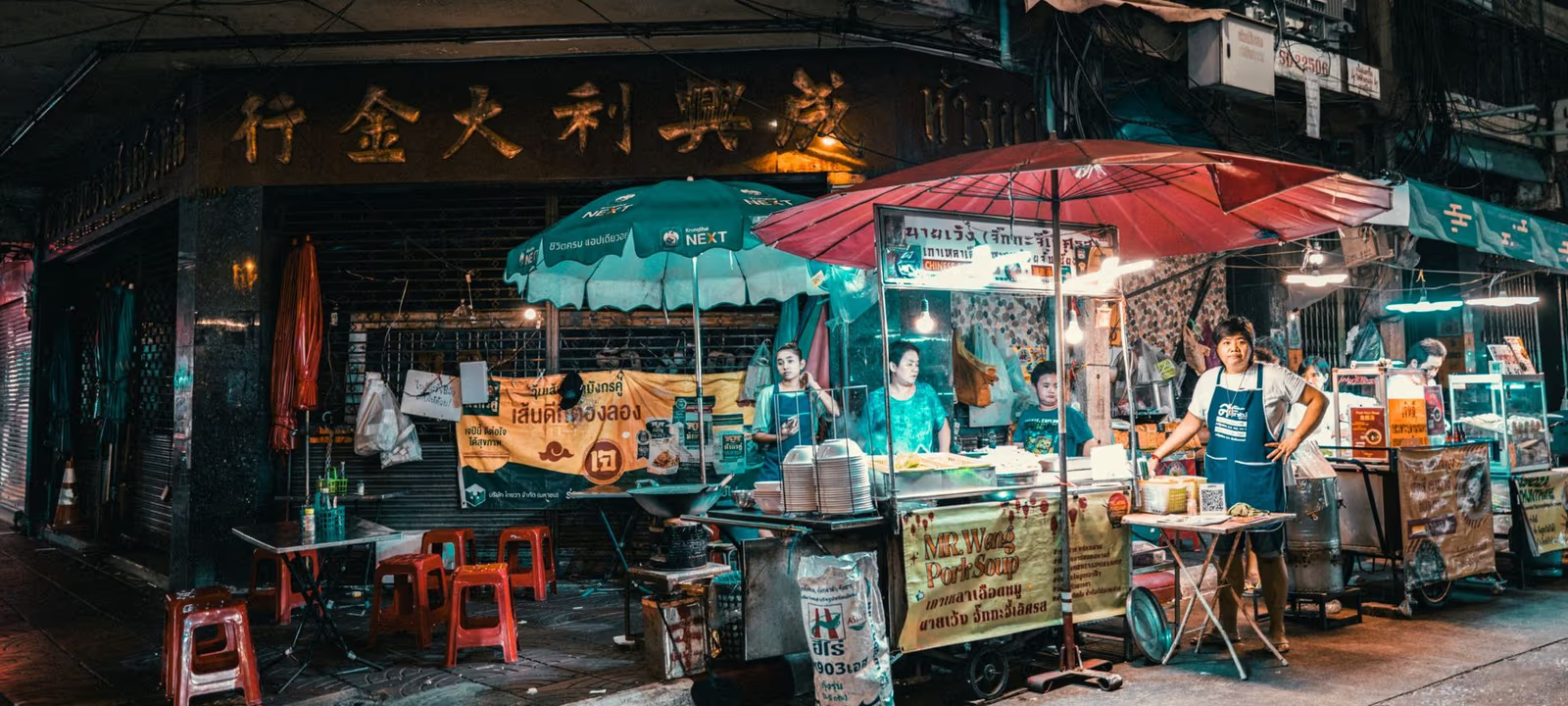
The SME market breaks into tiers. Multinational and established local chains already carry bank credit lines. Below them is the long tail: street food vendors and small mom-and-pop operators, who make up the bulk of SME numbers by count, carry lower individual credit needs, and are the segment the banking system is not reaching. The addressable market for embedded lending was never 'SMEs' as a category; it is specifically this tier.
Two structural constraints keep banks out. Thailand's National Credit Bureau carries thinner records than bureaus in other markets, and much of the long tail has no bureau file at all. Bank of Thailand rate caps, roughly 25% for personal loans and 33% for nano loans, leave little room to price for the higher servicing cost per baht lent on small loan sizes. Underwriting a segment banks can barely see, at a rate they can barely afford to lend at, does not clear a bank's return threshold even where demand is real. Embedded platform lending reaches an estimated 60% of long-tail merchants where the banking system has not.
- 01
Embedded distribution
An already-built base of riders and merchants keeps acquisition cost near zero.
- 02
Behavioural underwriting
Transaction data makes underserved, bureau-thin borrowers underwritable.
- 03
Funding economics
Cheap enough funding to leave sufficient margin once rate caps apply.
Read the rest of the report
Tell us where to send it. The rest of this page opens straight away, and we email you the PDF.
Get the full report