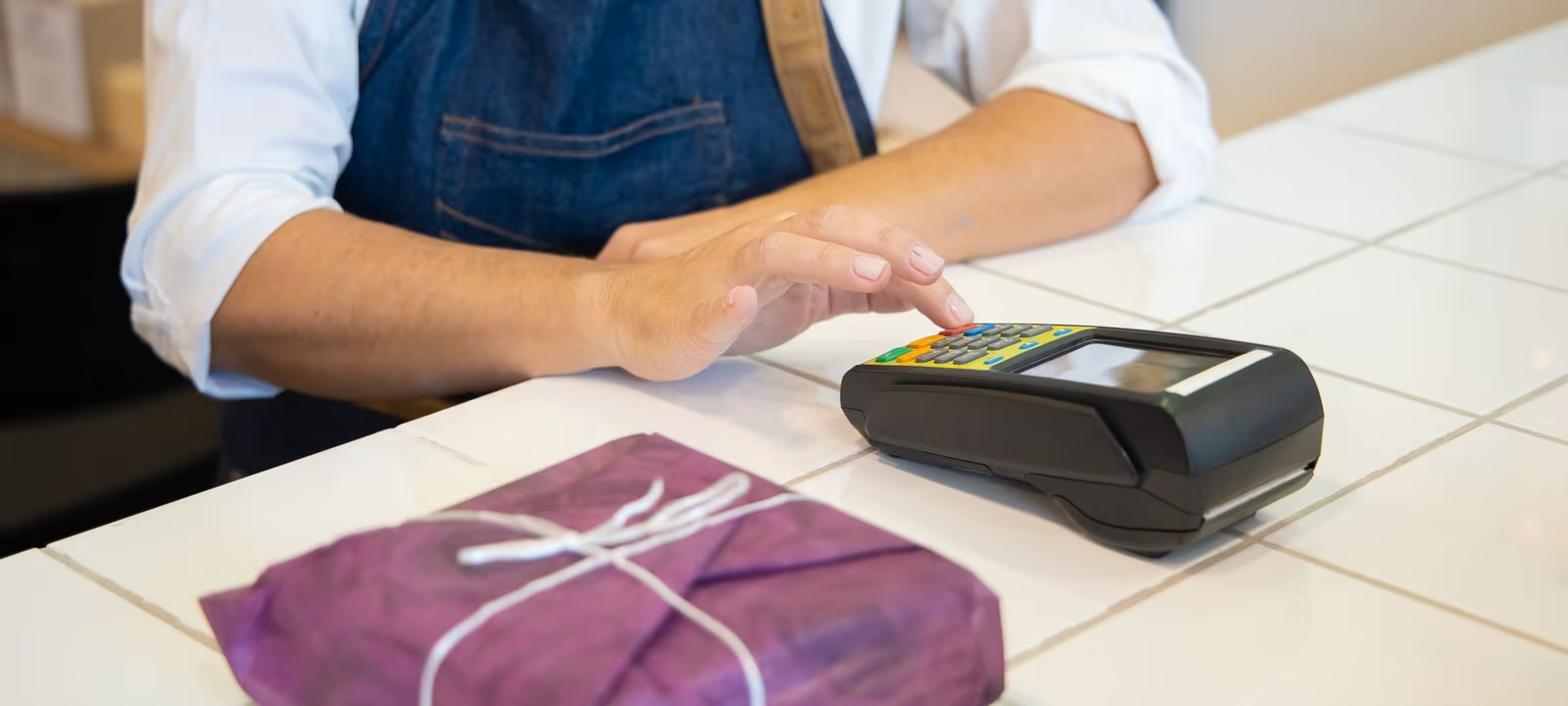
Merchant acquiring is the business of enabling a merchant to accept card payments and taking on the risk of that merchant's transactions. The acquirer connects the merchant to the card networks and issuing banks, settles funds, and underwrites the merchant. Underwriting, not payment processing, is the function that actually determines who makes money and who takes the loss.
What does a merchant acquirer actually do?
A merchant acquirer is the bank or licensed institution that lets a business accept card payments and stands behind those transactions. When a customer taps a card, the acquirer's infrastructure routes the authorization request to the card network, which passes it to the cardholder's issuing bank for approval, then carries the response back. The acquirer also settles the funds into the merchant's account, usually a day or two after the sale.
The acquirer vs issuer distinction is the one most people outside payments get backwards. The issuer represents the cardholder and decides whether to approve the transaction; the acquirer represents the merchant and guarantees that the merchant is a legitimate business worth routing money to. Everything downstream, pricing, risk, dispute handling, follows from that guarantee rather than from the plumbing that moves the message.
- 01
Map the fee waterfall
Separate interchange, scheme fees, and acquirer markup before comparing any two providers.
- 02
Identify who underwrites
Find out whether the acquirer, a PayFac, or a software platform is actually bearing merchant risk.
- 03
Check settlement terms
Confirm how funds move from card network to merchant account and where liability sits during that window.
- 04
Watch the embedded layer
Track how much volume is moving through ISV and platform-embedded acceptance versus direct acquiring.
How does the fee waterfall actually split up?
The fee a merchant pays on a card transaction is not one number owed to one party. Interchange, set by the card networks but paid to the issuing bank, is the largest piece and compensates the issuer for fraud risk and the funding it extends between purchase and statement. A smaller scheme fee goes to the network itself for running the rails. What remains after both is the acquirer's markup, and it has to cover underwriting, chargeback exposure, settlement risk, and the merchant-facing tools around the payment.
This is why acquiring margins were never as fat as the headline discount rate suggested. A merchant seeing 2.5% on their statement might see the acquirer keep well under half of that once interchange and scheme fees clear, and it is that residual sliver that every new entrant is now competing to shrink further.
How is a payment facilitator different from a traditional acquirer?
A traditional acquirer signs each merchant directly, underwrites each one individually, and holds a direct relationship with the card networks. A payment facilitator, or PayFac, sits underneath an acquirer as a master merchant and onboards sub-merchants beneath its own umbrella, often in minutes through an API rather than a paper application. The software platform a small business already uses, a booking system or a point-of-sale vendor, becomes the entity collecting the payment fee, with an acquirer still underneath doing the settlement and bearing ultimate risk.
For a reader evaluating where the category is heading, our payments and merchant-acquiring research tracks how quickly ISVs are converting their existing software relationships into payment revenue, which is the shift traditional acquirers are responding to rather than driving.
| Traditional acquirer | Payment facilitator | |
|---|---|---|
| Merchant onboarding | Individual underwriting, direct contract | Instant, rules-based, under a master account |
| Merchant relationship | Owned by the acquirer | Owned by the software platform |
| Risk concentration | Spread across a diversified portfolio | Concentrated under one PayFac's aggregate risk |
Why are acquiring margins compressing?
The PayFac model disintermediates the traditional acquirer's sales motion. Instead of an acquirer's sales team signing a merchant one contract at a time, a software vendor the merchant already trusts embeds payment acceptance into a product the merchant was buying anyway. The acquirer underneath still earns something, but it no longer owns the merchant relationship or the pricing power that came with it, and it competes for that underlying volume against every other acquirer willing to underwrite the same platform.
The same dynamic has pushed into merchant fee structures more broadly. Instalment and buy-now-pay-later options, discussed in our piece on what's actually driving the BNPL market, layer another fee negotiation onto the checkout and give large merchants further leverage to squeeze the acquirer's take. Scale merchants now negotiate acquiring costs the way they negotiate any other vendor contract, and software-embedded payments have made that negotiation easier to start.
What is the acquirer's job once the fees compress?
Underwriting. Once volume-based margin thins out, what is left that a PayFac cannot easily replicate is the acquirer's ability to price and absorb the risk of a merchant defaulting, running fraudulent transactions, or generating a chargeback wave the sub-merchant cannot cover. The acquirer is the party ultimately liable to the card networks if a merchant collapses owing refunds, and that liability does not disappear just because a software platform sits between them.
This is why the acquirers holding up best are the ones treating underwriting as the product rather than the cost center attached to a processing fee. Better risk models, faster fraud detection, and the willingness to take on merchant categories others decline are becoming the actual differentiator, because the transaction-routing part of the business has become close to a commodity that any competent processor can offer.