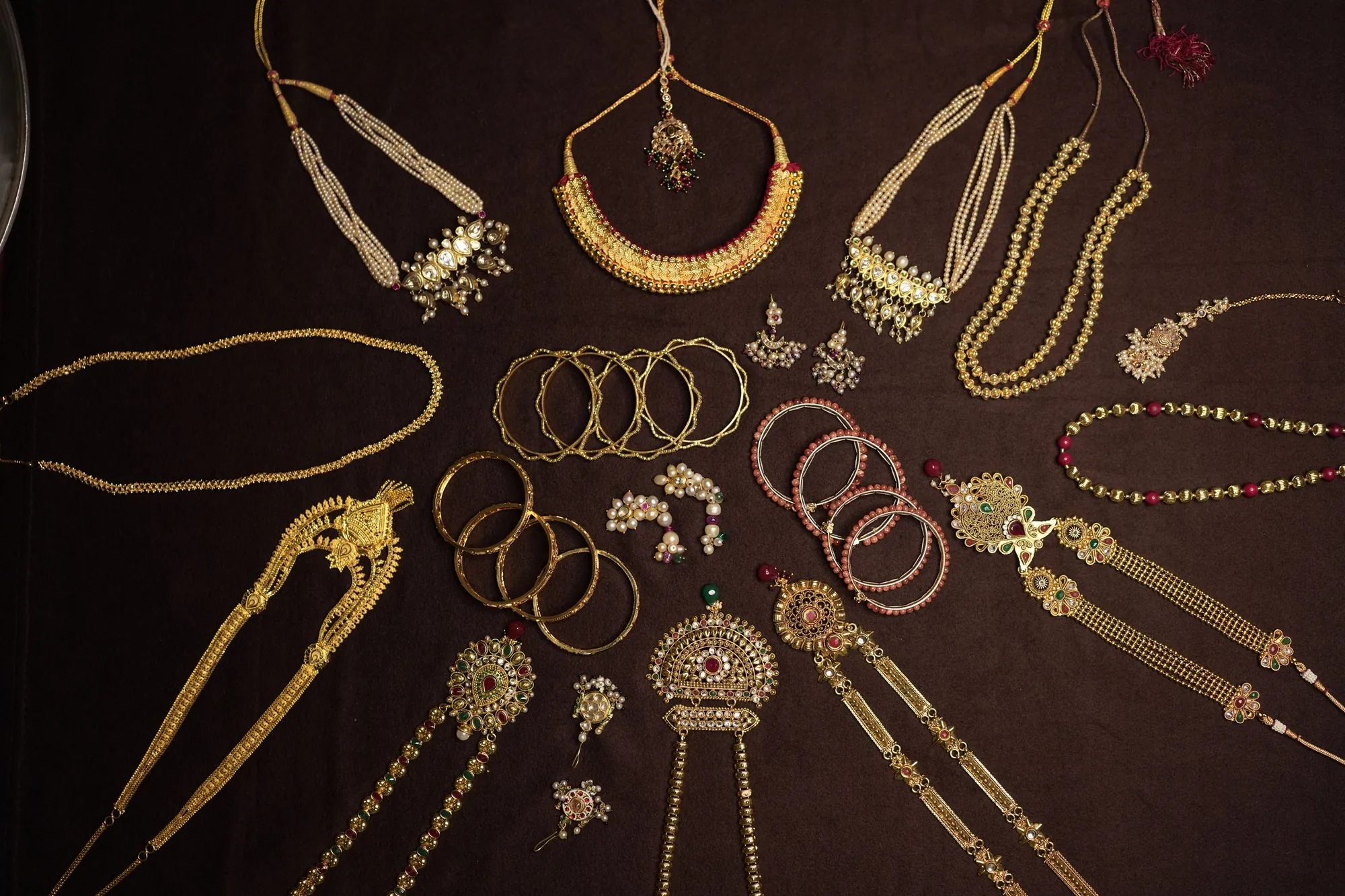
Gold trading in India is the buying and selling of gold exposure through physical bullion, spot contracts, futures and options on the Multi Commodity Exchange of India (MCX), gold exchange traded funds (ETFs) and electronic receipts. Which of these a bank, dealer or investor can use now depends on lot size, margin, delivery obligations and each venue's rulebook.
Contract and settlement design, more than price, moved volume between MCX, gold ETFs, the India International Bullion Exchange (IIBX) and offshore markets in 2025 and 2026.
Key points
- In a Nextyn Consulting & Research interview, a gold trading practitioner said compulsory physical delivery and the ₹1.49 crore kilogram lot push margin funded traders toward ETFs, OTC channels and offshore brokers offering exposure of up to 2,000 times margin.
- The World Gold Council (WGC) reports Indian gold demand of 162.5 tonnes in Q3 2026, 29% below Q3 2025, while Indian gold ETF inflows rose to 5.3 tonnes from 3.6 tonnes in Q2.
- At the WGC's Q3 2026 average MCX spot price of ₹148,891 per 10 grams, a 1 kg MCX gold futures lot is worth about ₹1.49 crore and settles by compulsory physical delivery.
- IIBX's annual report for FY2025 to 26 records 916.2 kg of gold traded, against 93,072.5 kg in FY2024 to 25.
Method. This analysis draws on a Nextyn Consulting & Research interview with a former business development manager at a global retail broker who has traded gold for about four and a half years. The practitioner's views are checked against WGC, SEBI, Reserve Bank of India (RBI), IIBX, Association of Mutual Funds in India (AMFI) and London Bullion Market Association (LBMA) data available on 16 November 2026.
What does gold trading in India involve for institutions?
For institutions, gold trading in India runs across four layers: physical gold trading through bullion dealers and banks, gold spot trading on exchanges and in the over the counter (OTC) market, gold derivatives on MCX, and fund wrappers such as ETFs. Each layer has its own regulator, settlement cycle and capital requirement.
The global gold commodity market is anchored in London, where the LBMA Gold Price sets the daily dollar reference. In India, physical bullion moves through dealers in Mumbai's Zaveri Bazaar, Delhi and Indore, through nominated banks that import refined gold, and since July 2022 through IIBX.
In the Nextyn Consulting & Research interview, the practitioner described the Indian bullion trade as highly decentralised, with a single large dealer turning over ₹400 crore to ₹500 crore by the practitioner's estimate. The OTC market, by contrast, is centralised and bank driven, and supports sovereign and collateral uses of gold.
How is the MCX gold futures market built?
The Indian gold futures market runs mainly on MCX through five contracts, from the 1 kg Gold contract down to the 1 gram Gold Petal. All are physically settled, so a position held into expiry becomes an obligation to take or give delivery. MCX lists gold futures and options, with options only on Gold and Gold Mini.
| MCX gold contract | Lot size | Notional value at Q3 2026 average spot (approx.) | Settlement at expiry |
|---|---|---|---|
| Gold | 1 kg | ₹1.49 crore | Compulsory physical delivery |
| Gold Mini | 100 g | ₹14.9 lakh | Compulsory physical delivery |
| Gold Ten | 10 g | ₹1.49 lakh | Compulsory physical delivery |
| Gold Guinea | 8 g | ₹1.19 lakh | Compulsory physical delivery |
| Gold Petal | 1 g | ₹14,900 | Compulsory physical delivery |
The interviewed practitioner sees the MCX contract ladder as both access point and constraint: the large contract suits dealers and jewellers who hedge, while small contracts give retail traders gold derivatives exposure on little capital.
In the practitioner's own trading, at lower gold prices, a Gold Petal position needed about ₹750 of margin for exposure of 10 to 20 times that amount, and one 1 kg lot carried about ₹88 lakh of value. At Q3 2026 prices, one Petal lot is worth about ₹14,900 and one kilogram lot about ₹1.49 crore, so margin requirements have risen in proportion.
Why does settlement design decide gold liquidity?
Gold liquidity in India follows settlement design. When a contract ends in physical delivery, a trader who holds it into expiry must fund the full value of the metal, not just the margin. That obligation limits how much speculative capital the onshore market can carry and pushes short term activity toward products settled in cash or units.
A trader may hold the 1 kg MCX contract on a margin that is a small share of its value, but, in the practitioner's words, "if you fail to close your position, then you will get the delivery of the gold" at full contract value.
Offshore brokers quote spot gold against the US dollar (XAU/USD) as contracts with no delivery and daily rollover. The practitioner said such brokers offer exposure of up to 2,000 times margin, and that at 200 times an account can be wiped out within a single session.
For Indian residents these platforms sit outside the law. The RBI's Alert List named 95 unauthorised forex trading platforms as of its 19 November 2025 update, and the RBI states that residents dealing on them are liable for action under the Foreign Exchange Management Act (FEMA). Rules like these are a subject for payments regulation research; for resident capital, offshore venues are not a legitimate channel.
The practitioner finds that Indian gold often trades in ranges, because much onshore activity is margin funded and delivery constrained, while international gold trading tends to trend around US data. In the practitioner's view, onshore and offshore price gaps close through cross border flows and news driven arbitrage, but delivery and settlement frictions slow that convergence in India.
How do gold ETFs, EGRs and Sovereign Gold Bonds compare?
Gold exchange traded funds in India are now the main regulated route for price exposure without delivery or margin calls. Every gold ETF India offers is backed by physical gold held with a custodian under SEBI rules, and its units trade and settle like shares. Electronic Gold Receipts and Sovereign Gold Bonds are the other regulated wrappers.
WGC data put Indian gold ETF holdings at about 124 tonnes at the end of Q3 2026, with nine month inflows of 28.8 tonnes, 47% above the same period of 2025. AMFI data show gold ETF assets under management of ₹1,91,166 crore at the end of August 2026.
Gold ETF flows in India cooled in October 2026. AMFI reported net inflows of ₹3,474 crore, down from ₹4,451 crore in September, after several fund houses paused fresh subscriptions to gold fund of funds schemes in mid October.
Gold backed exchange traded funds hold pooled metal; an Electronic Gold Receipt is instead a dematerialised claim on specific gold in a SEBI regulated vault, convertible back into metal. SEBI's EGR framework dates from January 2022. BSE began EGR trading in 2022, and the National Stock Exchange of India (NSE) launched an EGR segment on 4 May 2026.
On 8 November 2025 SEBI cautioned that digital gold sold online outside regulated products carries no investor protection under its rules.
At its board meeting on 24 September 2026, SEBI approved amendments extending its vault manager rules to bullion underlying ETFs and bullion derivatives, and raising the minimum net worth for vault managers from ₹50 crore to ₹75 crore. That brings the gold settlement chain, from vault to demat account, under one rulebook, a shift also visible in tokenized real world assets in South Korea.
Sovereign Gold Bonds (SGBs), issued by the RBI, have had no new tranche since SGB 2023 to 24 Series IV in February 2024, as the government cited higher borrowing costs. Existing SGBs still trade on exchanges and redeem on RBI schedules.
What is an IIBX transaction and who can trade on IIBX?
An IIBX transaction is a trade in gold or silver on the India International Bullion Exchange at GIFT City (Gujarat International Finance Tec-City), regulated by the International Financial Services Centres Authority (IFSCA). Trades are cleared centrally, and bullion sits in IFSC vaults as Bullion Depository Receipts until a buyer takes delivery.
IIBX's FAQ lists qualified jewellers, nominated banks where permitted, and trading and clearing members as eligible participants. Only qualified jewellers can move gold physically out of the IFSC into the domestic tariff area through the exchange. RBI rules let scheduled Indian banks' GIFT City branches act as IIBX trading and clearing members.
IIBX was launched on 29 July 2022 and is wholly owned by India International Bullion Holding IFSC, promoted by India's market infrastructure institutions. In March 2026 IIBX gained qualifying central counterparty (QCCP) status, which affects how banks treat exposure to its clearing house.
From 6 May 2026 IIBX added T+2 gold contracts across all tariff rate quota (TRQ) types, letting buyers fix a trade date price for delivery within two settlement days.
How did duties and import routes move bullion trading in 2026?
Bullion trading in India moved sharply between channels in 2025 and 2026 because of tax and duty changes rather than price. IIBX volume fell from 93,072.5 kg in FY2024 to 25 to 916.2 kg in FY2025 to 26, according to its annual report, while a tax dispute in April 2026 briefly made IIBX the main working import route.
In FY2024 to 25, TRQ imports under the India UAE Comprehensive Economic Partnership Agreement (CEPA) made up almost all IIBX gold volume. The annual report links the later fall to gold imported in alloy form at zero duty, which left domestic prices at a deep discount to international levels.
From 1 April 2026, customs began asking banks to pay 3% integrated goods and services tax (IGST) on gold imports, and banks paused shipments, Outlook Business reported. Traders said importing through IIBX takes longer and ties up more working capital, the cost and speed trade off that also decides routing on cross border payment rails.
Under Customs notifications dated 12 May 2026, India raised its gold import duty from 6% to 15% from 13 May, made up of 10% basic customs duty and 5% Agriculture Infrastructure and Development Cess. The WGC estimates unofficial inflows rose to about 50 tonnes in Q3 2026, from about 3 tonnes a year earlier.
| Gold channel in India | Main users | Settlement | Delivery obligation | Regulator |
|---|---|---|---|---|
| MCX gold futures and options | Dealers, jewellers, traders | Exchange clearing, physical at expiry | Yes, compulsory | SEBI |
| Gold ETFs and gold fund of funds | Investors | ETF units T+1 on exchange | No | SEBI |
| Electronic Gold Receipts (NSE, BSE) | Investors, dealers | Demat receipts, convertible to metal | Optional conversion | SEBI |
| Sovereign Gold Bonds (existing tranches) | Existing holders | Exchange trades; RBI redemption | No, cash at redemption | RBI |
| IIBX spot and T+2 contracts | Qualified jewellers, banks, members | Central clearing at GIFT City | Yes, bullion delivery | IFSCA |
| Bank and nominated agency imports | Banks, refiners, dealers | Bilateral | Yes | RBI and Directorate General of Foreign Trade (DGFT) |
| Offshore XAU/USD contracts | None for Indian residents (RBI Alert List) | Broker book, daily rollover | No | None in India |
How does international gold trading set Indian prices?
International gold trading is priced in US dollars, cleared largely in London and driven in the short term by US data. The practitioner singles out the consumer price index (CPI), non farm payrolls and Federal Open Market Committee (FOMC) decisions, because each shifts expectations for real rates and the dollar, which tends to move against gold.
Gold spot trading in London rests on deep clearing. LBMA data show average daily net clearing of 15.7 million ounces of gold, worth about $74.2 billion, in April 2026. The WGC reports Q3 2026 global demand of about 1,369 tonnes including OTC, with central bank buying of about 321 tonnes, 42% above Q3 2025.
The practitioner described gold as mainly event driven, with geopolitical tension and inflation as the medium term drivers. The view that gold trends higher over long horizons is one practitioner's opinion, not a forecast. How Indian desks process such event data is covered in our analysis of AI in Indian capital markets.
What does a gold trading platform in India need to get right?
A gold trading platform serving Indian participants now competes on structure: how small a position can be, how settlement is handled, how margin is protected and whether delivery is optional. Micro lots, clear tender period rules and ETF or EGR access let smaller participants hold gold without funding full delivery.
The practitioner's four priorities:
Where onshore contract specifications do not match investors' capacity, the practitioner expects volume to keep moving toward ETFs, OTC channels and offshore venues. Engaging regulators on settlement reform is therefore part of product strategy, and a market entry assessment should test it early.
- 01
Lower the capital barrier
Offer micro lots, cash settled contracts where regulators allow them, and ETF or EGR access.
- 02
Publish delivery terms early
State tender period and delivery obligations well before expiry.
- 03
Protect margin around US data
Tighten margin safeguards around CPI, payrolls and FOMC releases.
- 04
Reserve for shocks
Model liquidity reserves against geopolitical and rate scenarios.
What this means for banks, bullion dealers, exchanges and investors
Each participant group in Indian gold trading faces a different constraint: import routing for banks, delivery funding for dealers, contract design for exchanges, regulatory signals for fund houses, and custody and legal access for investors. Each follows from the settlement and regulatory changes of 2025 and 2026.
- Banks importing bullion should plan for policy driven shifts between the bank route and IIBX.
- Bullion dealers and jewellers can hedge and pre book metal with the MCX contract ladder and IIBX T+2 contracts if they fund delivery ahead of the tender period.
- Exchanges and brokers compete on lot size, settlement method and margin protection; competitive benchmarking of exchanges and brokers shows where gold liquidity is won.
- Asset managers running gold ETFs and fund of funds schemes should expect flows to follow regulatory signals.
- Institutional investors comparing onshore and international gold trading should weigh settlement, custody and legal access, not only price.
Nextyn Consulting & Research studies how contract design, settlement and regulation move volume between gold trading channels in India through its Payments & Fintech Market Research practice.
Sources
- World Gold Council, "Gold Demand Trends Q3 2026: India focus", November 2026. https://www.gold.org/goldhub/whitepapers/gold-demand-trends/gold-demand-trends-india-focus-q3-2026
- World Gold Council, "Central bank buying and ETF inflows support gold demand in Q3", press release, November 2026. https://www.gold.org/news-and-events/press-releases/central-bank-buying-and-etf-inflows-support-gold-demand-q3/
- World Gold Council, "Gold Demand Trends Q3 2026: Investment", November 2026. https://www.gold.org/goldhub/whitepapers/gold-demand-trends/gold-demand-trends-q3-2026/investment
- Multi Commodity Exchange of India, gold contract specifications (Gold, Gold Mini, Gold Ten, Gold Guinea, Gold Petal), accessed November 2026. https://www.mcxindia.com/products/bullion/gold
- IIBX, "5th Annual Report FY2025 to 26", 2026. https://iibx.co.in/download/Annual_Report//5th%20Annual%20Report_FY2025-26$684e398c-f87a-4519-84c4-36a99070aa48.pdf
- IIBX, "Launch of T+2 Contracts at IIBX Gandhinagar", press release, 1 May 2026. https://iibx.co.in/download/media/46/PR%2001.05.2026$6026eb61-def5-482c-9169-883de1fdbd4a.pdf
- IIBX, Promoters and FAQs pages, accessed November 2026. https://iibx.co.in/About/Promoters and https://iibx.co.in/Resources/FAQs
- FOW, "India's IIBX granted qualifying central counterparty status", 26 March 2026. https://www.fow.com/insights/indias-iibx-granted-qualifying-central-counterparty-status
- Outlook Business, "Four years on, why is India's bullion exchange still struggling", 7 August 2026. https://www.outlookbusiness.com/economy-and-policy/four-years-on-why-is-indias-bullion-exchange-still-struggling
- Outlook Business, "Govt raises import duty on gold, silver to 15% to curb non essential imports", May 2026. https://www.outlookbusiness.com/economy-and-policy/govt-raises-import-duty-on-gold-silver-to-15-to-curb-non-essential-imports
- Central Board of Indirect Taxes and Customs, Customs Notification No. 16/2026 (AIDC and SWS rates on gold and silver), 12 May 2026, issued with Notification No. 15/2026 (basic customs duty); copy of 16/2026 hosted by CA Alley. https://caalley.com/cus26/cst-16-2026.pdf
- Securities and Exchange Board of India, "Caution to public regarding dealing in Digital Gold", PR No. 70/2025, 8 November 2025. https://www.sebi.gov.in/media-and-notifications/press-releases/nov-2025/caution-to-public-regarding-dealing-in-digital-gold-_97676.html
- Securities and Exchange Board of India, circular SEBI/HO/CDMRD/DMP/CIR/P/2022/07, "Framework for operationalizing the Gold Exchange in India", 10 January 2022. https://www.sebi.gov.in/legal/circulars/jan-2022/framework-for-operationalizing-the-gold-exchange-in-india_55251.html
- Securities and Exchange Board of India, "Key decisions taken in the SEBI Board Meeting dated 24th September, 2026", PR No. 59/2026. https://www.sebi.gov.in/media-and-notifications/press-releases/sep-2026/key-decisions-taken-in-the-sebi-board-meeting-dated-24th-september-2026_104725.html
- Business Today, "Gold, silver ETFs get a new vaulting framework: SEBI raises vault managers' net worth requirement", 24 September 2026. https://www.businesstoday.in/personal-finance/story/gold-silver-etfs-get-a-new-vaulting-framework-sebi-raises-vault-managers-net-worth-requirement-557685-2026-09-24
- Business Today, "NSE's Electronic Gold Receipts launched", 4 May 2026. https://www.businesstoday.in/personal-finance/investment/story/bt-explainer-nses-electronic-gold-receipts-egr-launched-what-they-mean-for-you-529672-2026-05-04
- Association of Mutual Funds in India, monthly data (gold ETF AUM and flows). https://www.amfiindia.com/research-information/amfi-monthly
- Business Today, "Gold ETF inflows decline 22% to ₹3,470 crore in October", 11 November 2026 (AMFI data). https://www.businesstoday.in/personal-finance/story/gold-etf-inflows-decline-22-to-rs3470-crore-in-october-are-investors-turning-cautious-on-gold-566904-2026-11-11
- Outlook Money, "Why gold ETF inflows surged 67% in August 2026", September 2026 (AMFI month end AUM). https://www.outlookmoney.com/invest/why-gold-etf-inflows-surged-67-in-august-2026-key-factors-explained
- Business Today, "Budget 2026: is bringing back Sovereign Gold Bonds feasible for the government", 21 January 2026. https://www.businesstoday.in/personal-finance/investment/story/budget-2026-with-gold-prices-rising-is-bringing-back-sovereign-gold-bonds-feasible-for-the-government-512106-2026-01-21
- Reserve Bank of India, press release updating the Alert List of unauthorised forex trading platforms, 19 November 2025. https://www.rbi.org.in/scripts/BS_PressReleaseDisplay.aspx?prid=61646
- LBMA, "LBMA Net Clearing Data (Daily Averages): April 2026", June 2026. https://www.lbma.org.uk/articles/lbma-net-clearing-data-daily-averages-april-2026