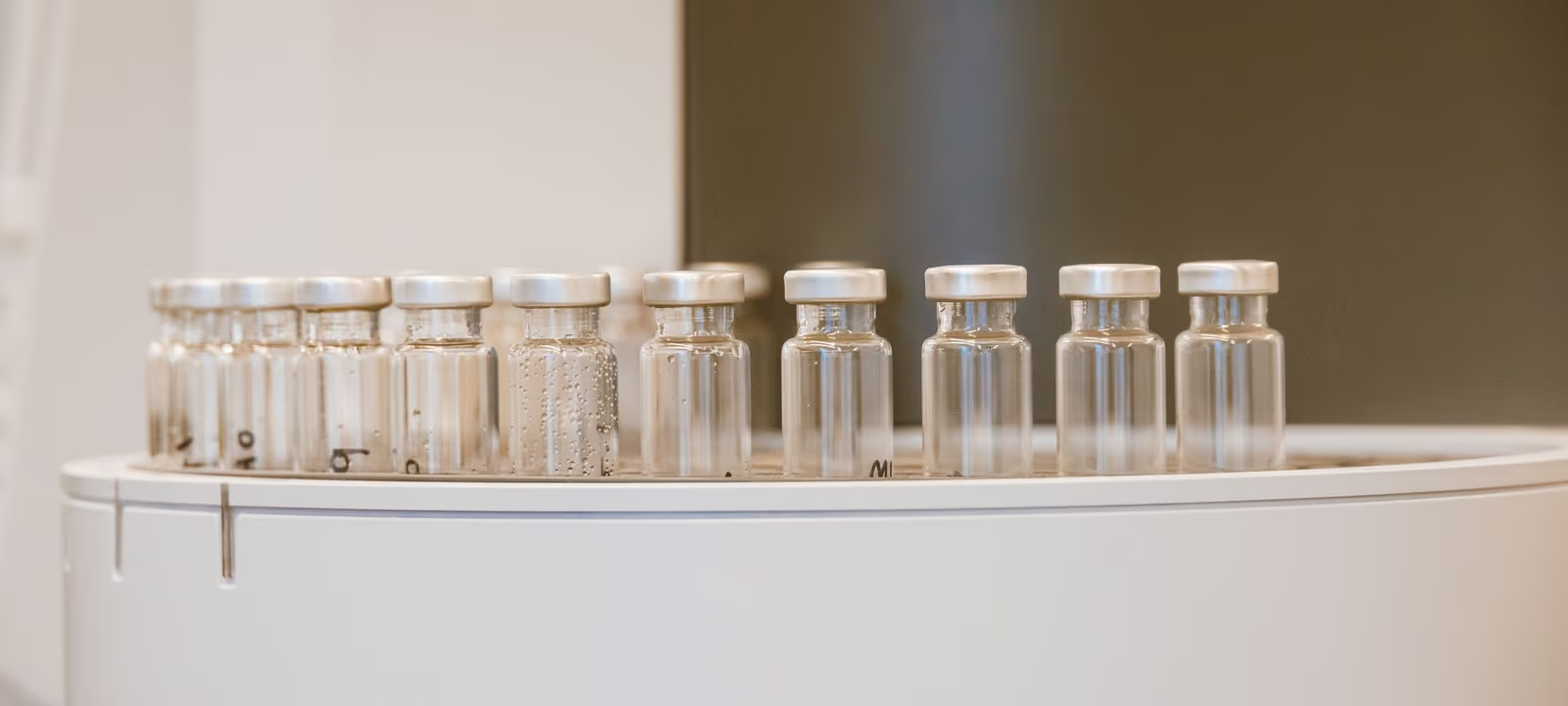
Biosimilar adoption lags the patent cliff because a biosimilar competes on more than price. Prescriber trust in switching, interchangeability designation rules, and payer rebate contracts with originator manufacturers all slow uptake, so the gap between approval and meaningful market share is often measured in years, not months.
Why does the gap between patent expiry and adoption persist?
A patent cliff is a pricing event on paper and a behavioural one in practice. The originator biologic loses exclusivity, one or more biosimilars enter at a meaningful discount, and in a purely rational market share would move quickly toward the cheaper, clinically equivalent option. It rarely does.
The reason is that a biologic is not a small-molecule generic. A generic is chemically identical and substitutable by pharmacists in most markets without anyone's sign-off. A biosimilar is highly similar but not identical, manufactured through a living cell line rather than a fixed chemical synthesis, and every stakeholder in the chain, prescriber, pharmacist, payer, and patient, treats that difference as a reason to move carefully rather than automatically.
That caution compounds rather than cancels out across the chain. A prescriber who is only mildly hesitant, a payer whose formulary committee meets quarterly rather than monthly, and a patient who has read that biosimilars are similar rather than identical each add a small delay, and those delays stack. None of them individually explains a multi-year lag between patent expiry and majority market share, but together they explain why the lag is the rule across biologic classes rather than the exception.
- 01
Map the rebate exposure
Identify which payers and health systems are locked into originator rebate contracts before launch.
- 02
Segment naive versus stable patients
Target new-start prescribing first, since switch-attribution concerns slow conversion of stable patients.
- 03
Track interchangeability status
Confirm whether the biosimilar carries interchangeable designation, since it changes the pharmacy substitution path.
- 04
Engage KOLs on switching evidence
Address prescriber trust directly with switching-study data rather than assuming price alone will move volume.
What keeps prescribers from switching stable patients?
The strongest resistance point is not new patients, it is existing ones. A physician managing a patient who is stable on an originator biologic has little clinical incentive to switch them to a biosimilar and a real incentive not to. If the patient's condition changes after a switch, the physician cannot cleanly attribute it to natural disease variation versus the switch itself, and that ambiguity is uncomfortable enough that many prescribers default to leaving stable patients alone.
New-patient starts move faster, because there is no incumbent therapy to displace and no switch-attribution problem to navigate. This is why biosimilar uptake curves typically show share gained disproportionately among treatment-naive patients long before the existing patient pool turns over, and why aggregate adoption numbers understate how entrenched originator share remains among patients already on therapy.
Nurse educators and specialty pharmacy staff often matter as much as the prescriber's own view, because they are the ones fielding the patient's questions between visits. A practice that has invested in explaining the switch, what similarity actually means clinically and what to watch for, tends to convert stable patients faster than one that leaves the conversation to a five-minute appointment. Adoption, in that sense, is as much an operational capability as a clinical decision.
How do interchangeability rules shape uptake?
In the US, a biosimilar approved by the FDA is not automatically substitutable at the pharmacy the way a generic is. It needs a separate interchangeability designation, which requires additional switching studies showing that alternating between the biosimilar and the originator carries no added risk. Without that designation, a pharmacist generally cannot substitute the biosimilar without the prescriber's explicit authorization on each prescription, which reintroduces exactly the friction a lower price was supposed to remove.
Europe never built this second tier. Regulators there have long treated biosimilar approval itself as sufficient grounds for substitution, with individual member states setting their own switching and dispensing rules on top of that baseline. The result is that the same molecule, approved on essentially the same clinical evidence, faces a materially lower procedural bar to substitution in most European markets than it does in the US, which is one of the clearer structural explanations for why European biosimilar penetration has generally moved faster and deeper than the US market for comparable products.
The practical effect inside a US health system is that a biosimilar without interchangeable status sits on formulary as a preferred option a physician has to actively choose, not a default the pharmacy applies automatically. That single procedural difference shapes prescribing behaviour more than most people expect, because it moves the switching decision from a system-level default back onto an individual clinician's desk, prescription by prescription.
| United States | Europe | |
|---|---|---|
| Substitution basis | Requires separate interchangeability designation | Approval itself generally sufficient |
| Pricing negotiation | Fragmented across private payers and PBMs | Often national or regional purchasing power |
| Typical adoption curve | Slower, favours new-patient starts | Faster, deeper penetration over time |
What is the rebate wall and why does it blunt discounts?
List price is not what a payer actually pays. Originator manufacturers facing biosimilar entry frequently respond by increasing rebates to pharmacy benefit managers and insurers rather than cutting list price outright, which keeps the originator's net cost competitive with the biosimilar even while its sticker price stays high. Because formulary placement is negotiated on net cost, not list price, a biosimilar's headline discount can be substantially neutralized before it ever reaches a prescriber's formulary options.
This is the mechanism payers and manufacturers both understand better than the discount headlines suggest, and it is exactly the kind of formulary dynamic that shows up clearly in structured payer and KOL research long before it appears in published pricing data. Rebate contracts are typically confidential, multi-year, and structured to reward exclusivity, so a health system already locked into an originator's rebate agreement has a financial reason to keep prescribing it even after a cheaper biosimilar is available on paper.
The rebate wall also explains why biosimilar competition sometimes lowers the originator's net price without ever winning much volume itself. A biosimilar entrant can force the originator manufacturer to sweeten its rebate offer enough that the payer's net cost calculus barely changes, and the entrant ends up having disciplined pricing across the category while capturing only a modest share of it.
Why does the US lag Europe on biosimilar penetration?
Three structural differences compound rather than operate in isolation. Europe's single-tier approval-equals-substitutable framework removes a procedural step the US retains. European health systems typically negotiate biologic pricing at a national or regional level, which concentrates purchasing power and makes rebate-driven originator defense harder to sustain than in the US, where formulary decisions are fragmented across many private payers and PBMs.
The US market access process itself adds a layer of delay: getting a biosimilar onto formulary favorably enough to actually move prescribing volume requires the kind of evidence package and payer engagement covered in pharma market access strategy, and that process runs on a slower clock than regulatory approval does. None of these gaps are permanent. As more interchangeable designations accumulate and US payers gain experience with biosimilar categories, the US curve has been closing on Europe's, but the starting distance has been large enough that it takes several years to visibly narrow.
The comparison also matters for how manufacturers plan a launch sequence. A biosimilar programme built around a single global playbook tends to underperform in whichever market its assumptions fit worst, because the substitution rules, purchasing structure and rebate dynamics genuinely differ by geography rather than merely by degree. Treating the US and European launches as separate strategic problems, with separate timelines for when volume is realistic, tends to produce forecasts that hold up better than ones built on a single adoption curve applied everywhere.